新华社布达佩斯6月29日电(记者刘旸、陈浩)在2022布达佩斯游泳世锦赛29日进行的跳水混双3米板决赛中,中国组合林珊/朱子锋以324.15分夺冠,为中国跳水队摘得当日第三枚金牌。

二 |
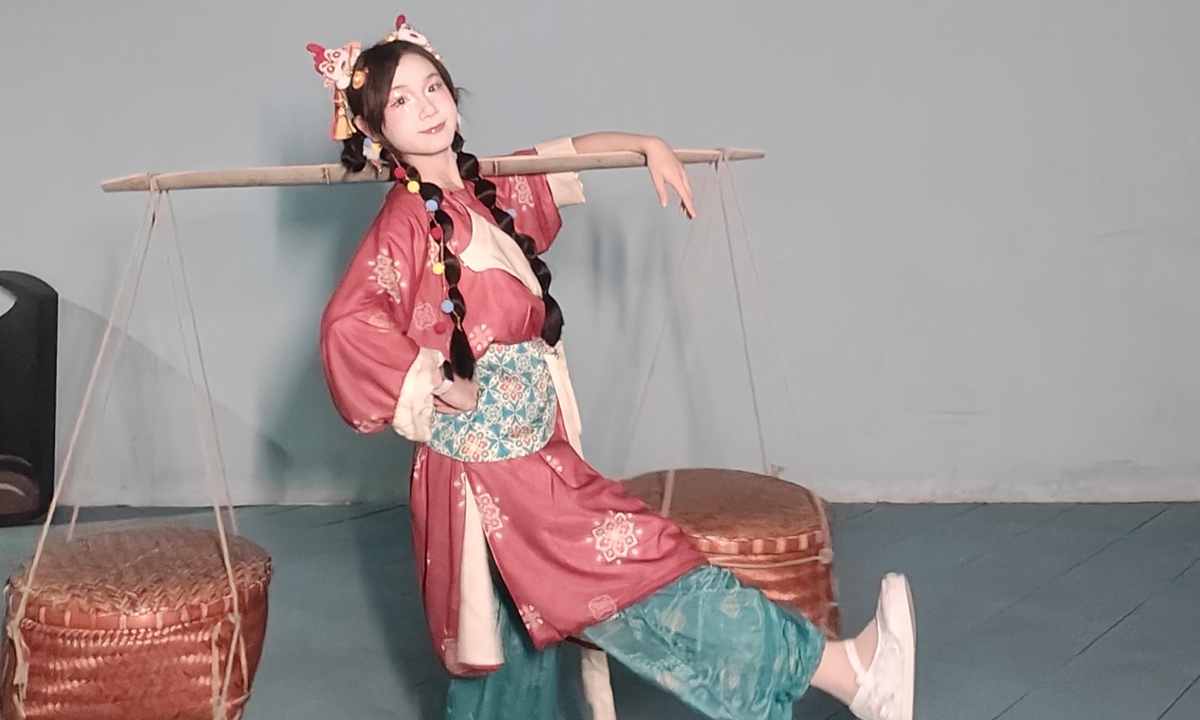
Acrobat Bing Bing backstage at a scenic spot in Beijing Photo: Courtesy of Bing BingAt an amusement park in Beijing, a young female clown tossed an apple into the air several times, catching it each time and taking bites out of it along the way. The seemingly simple routine delighted visitors, many of whom pulled out their phones to film it. Videos of the act have garnered more than 6 million likes on Douyin, China's version of TikTok.
Bing Bing, a young acrobat born in the 2000s, told the Global Times that she first tested the "tossing and eating an apple" routine through short videos before taking it to the stage. After her first performance, she spent the holidays performing it, adjusting the movements and pacing based on how audiences responded.
"Performance is the hardest thing to master. Your facial expressions and body movements have to convey to the audience what you are doing and what you want to do," she said. "The goal is to make them know that you are performing, yet still find it entertaining."
According to Bing Bing, the training behind such performances is far less glamorous than the finished act suggests. "Training is very repetitive. You fail, repeat, fail again, succeed and then fail again," she said. "Practice is what turns quantity into quality, even facial expressions and body movements require deliberate practice."
For Bing Bing, however, mastering the routine is only one part of the job. Once performers step in front of an audience, the carefully rehearsed movements have to adapt to a live and unpredictable setting.
Beyond the theaterIn recent years, acrobatic performances have increasingly moved into aquariums, theme parks and cultural tourism venues, where audiences themselves become part of the performance rather than simply watching from fixed seats.
Bing Bing previously performed alongside other clowns at an aquarium, inviting visitors to participate in the act. She said the difference is not merely a change of venue: performers have to constantly interact with the people in front of them.
"Traditional stages are farther away from the audience and are better suited to performances that people simply watch," she said. "Aquariums and theme parks, however, place greater emphasis on interaction and connection with the audience. Even with the same routine and interactions, you can often get unexpected results."
That interaction also changes how performers think about rhythm and presentation. A routine that works in a theater cannot necessarily be transferred unchanged to a tourist attraction, where audience reactions, distance and participation can all alter what happens on stage.
Sun Dawei, head of the Wuqiao Acrobatic School, told the Global Times that this shift is also changing the industry's approach to production.
"Acrobatics used to focus mainly on showcasing skills. Now there is greater emphasis on story-telling and emotional expression," he said. "Performances are no longer confined to theaters, but are increasingly staged as resident shows at cultural tourism venues."
According to Sun, a production usually begins with a theme, followed by the selection of appropriate skills. Performers then refine the routine repeatedly before adding music and stage design and going through multiple rehearsals.
"Traditional signature skills and core fundamentals must be preserved," he said. "Content that simply pursues danger or no longer fits contemporary aesthetics needs to be repackaged. Traditional skills should be given new forms of expression while retaining their roots and appealing to modern audiences."
For Bing Bing, this shift has also been made possible thanks to short-video platforms. Her apple routine gained its first wide exposure online before audiences encountered it in person.
"Short videos have helped more people learn about Chinese acrobatics and traditional culture, and encouraged more people to go to theaters and watch performances offline," she said.
The growing visibility of acrobatics online, however, has raised another question: once traditional skills enter new venues and digital platforms, how can performers avoid simply repeating familiar formulas?
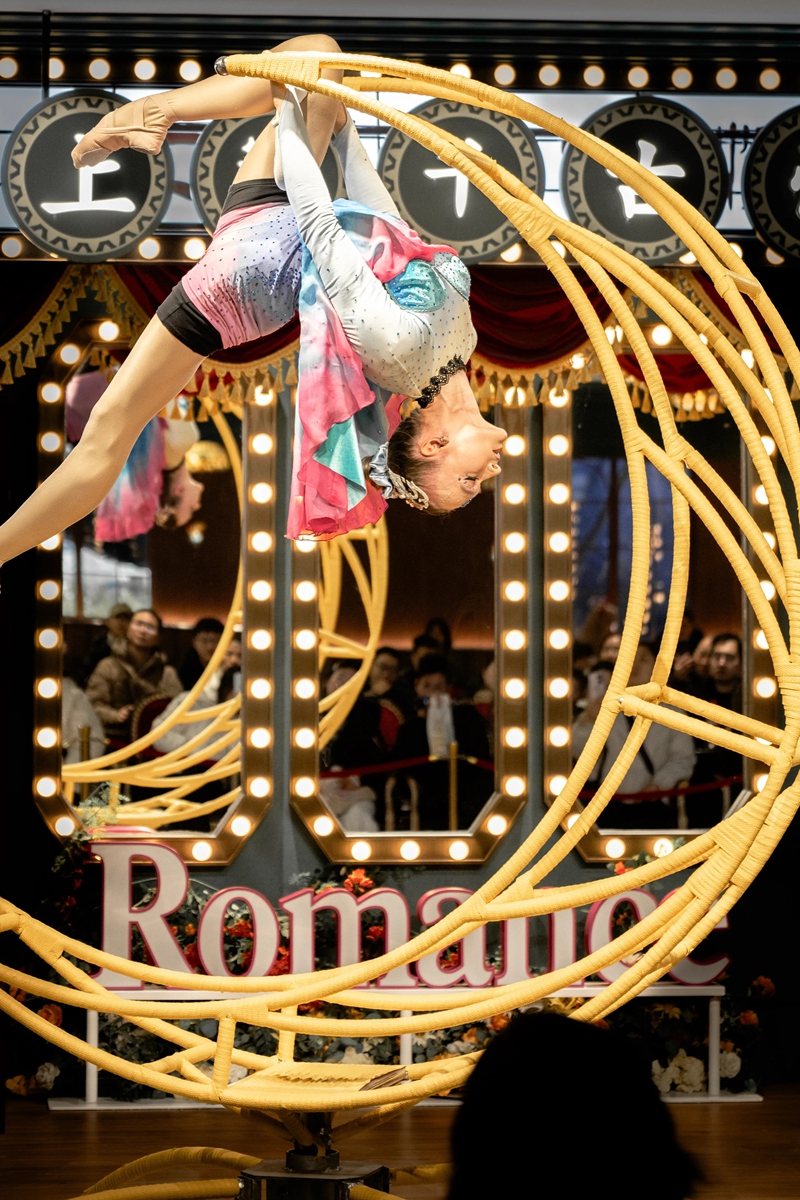
Acrobat Liza performs an aerial acrobatics routine. Photo: Courtesy of Liza
Breaking the formulaRussian aerial acrobat Liza, who has lived and worked in China for more than seven years and now performs regularly at Shanghai Qianguqing, a large-scale cultural tourism attraction featuring live performances, noted that the answer lies in how a show is constructed as a whole.
"A performance should start with an overall concept, and then you choose the props and music around it. Music itself can guide the choice of movements, provided the performer already has a solid technical foundation," Liza told the Global Times. "The transitions between movements have to be natural and smooth, like telling a story step by step. Costumes are also important because they complete the character. Everything needs to work together."
For Liza, technical difficulty should serve the performance rather than become the performance itself.
"Real professionalism means making the audience unable to see how hard you are working. Everything should look effortless," she said. "I value beauty and precision in movement. You should not make things more complicated simply to show off your skills. You should improve steadily as you grow as a performer, rather than constantly chasing greater difficulty."
She said that this is particularly important as increasingly extreme acts, including hair- and tooth-hanging, attract attention online.
"Most performers are following established templates, and I rarely see people creating something that is truly their own," Liza said. "You can find your own style and way of expression without taking excessive risks."
From an apple-tossing routine that drew more than 6 million likes to performances in aquariums and cultural tourism venues, traditional acrobatics is finding new ways to reach audiences. But bringing an old art back into the spotlight is not simply about making tricks harder or more spectacular. As Bing Bing's apple routine shows, sometimes it takes a familiar skill presented in an unfamiliar way to make a new generation stop and watch again.
。混双3米板项目是第四次亮相世锦赛赛场。中国队在2015和2017年世锦赛上曾夺金。2019年世锦赛上,混双3米板是中国队唯一没有获得奖牌的项目。29日决赛中,林珊/朱子锋每轮在全部13对参赛选手中第四位出场,从始至终占据积分榜榜首位置,没有给其他选手留下任何机会。意大利组合圣托罗/佩拉卡尼以293.55分摘银,英国组合希特利/里德以287.61分位居第三。这是上届世锦赛混合全能项目夺冠的林珊第二次摘得世锦赛金牌。
“混合全能虽然是两个人搭档,但跳的时候是自己跳自己的,混双更考验两个人的配合。”林珊说,“混双比赛需要更多交流,更多默契。” 朱子锋是首次参加世锦赛,赛后林珊对搭档给予了很高评价。“我的搭档今天表现非常好,他心态比我好,可能因为他是第一次吧,那种豁出去的感觉特别棒。

三 | ”林珊说,“一开始比赛大家都会有这种感觉,有些比赛经验后可能反而有心理包袱。我们之间这种感觉要互相影响,互相促进。” 在混双3米板决赛前,两位15岁小将全红婵/白钰鸣在混合全能决赛中折桂,为中国跳水队摘下世锦赛第100枚金牌。随后,李亚杰夺得女子1米板金牌。

四 | 林珊/朱子锋为中国队揽入当天第三金。游泳世锦赛跳水项目开赛后,截至目前共决出7个冠军。中国队无一失手,7枚金牌全部收入囊中。30日,布达佩斯多瑙河体育馆将进行女子双人10米台、男子1米板的预赛和决赛。
Current article:http://znv0c.hunyoduozuiaopoulun.buzz/gtxi26t/ccc3tf.html
Published on:05:02:44

